
Adopt a lobster adopt now
A thank you to the volunteers and placement students at the heart of the hatchery this year — and a look at the research they've been doing.
Every juvenile lobster that leaves the Whitby Lobster Hatchery has passed through more hands than you might expect. Our volunteers and placement students are central to everything we do — from feeding our young lobsters and watching over the developing eggs carried by our berried hens, to the quiet, behind-the-scenes tank care that keeps every animal healthy.
This year we welcomed 24 placement students in total: 9 completing work placements through university or college, 5 carrying out a specific research project, and 10 joining us independently. Support from the Woodsmith Foundation funded the staff time to train and mentor them, so each left with real aquaculture experience and hands-on conservation research behind them.
Among this year's cohort, three students took on research projects into how we rear European lobsters (Homarus gammarus) — work that is already shaping our day-to-day practice.
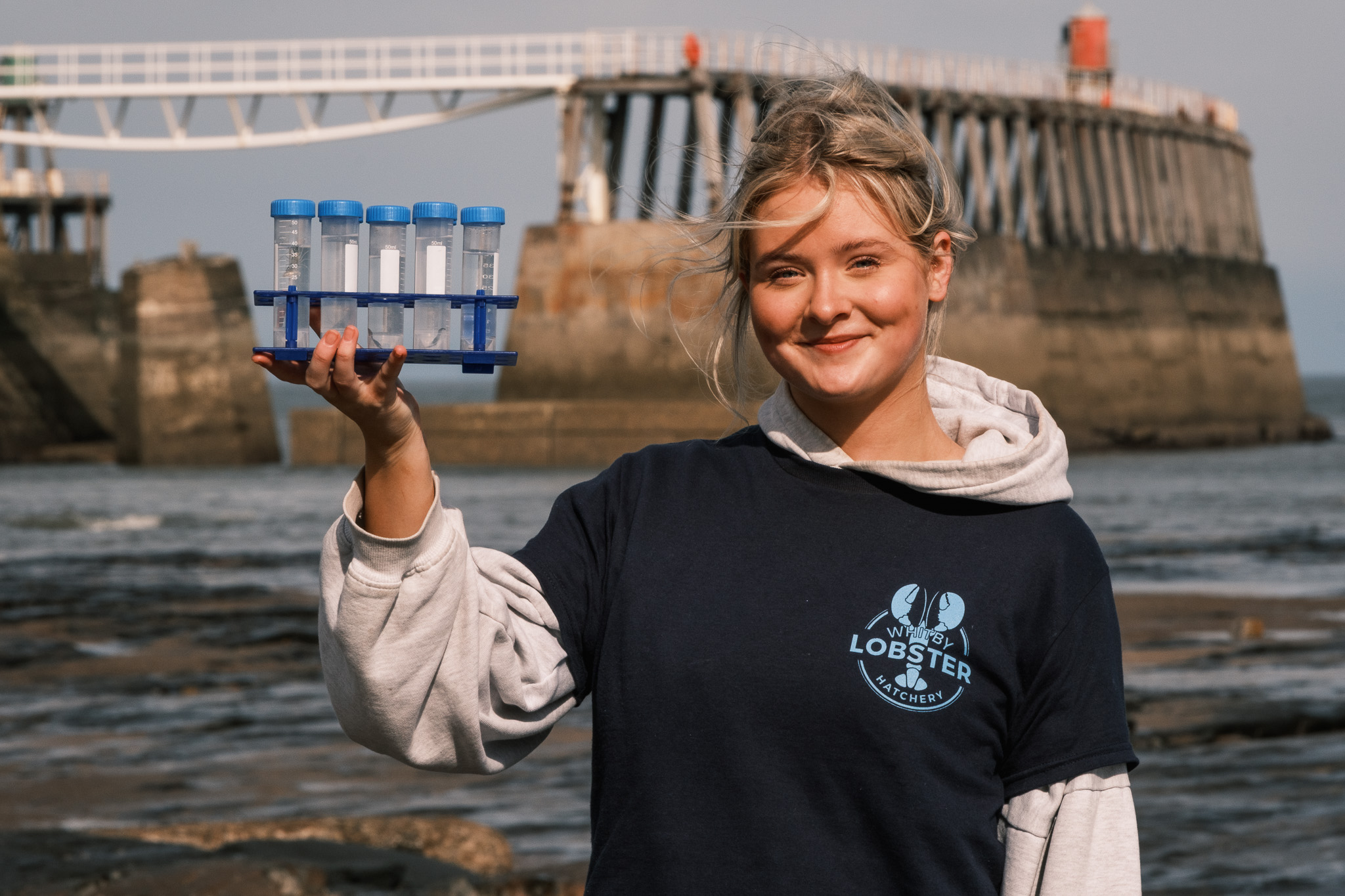
Jas Louis — live feed versus formulated feed
Jas tackled a question we've wanted to explore for a while: whether lobster larvae do better on live feed, a formulated feed, or a mix of the two. Live feed (Artemia, a tiny brine shrimp) doubles as enrichment for the larvae, stays clean in the water and causes little fouling. A formulated feed (Otohime) gives us precise control over nutrition and can be tailored to a species. Jas split our upwellers — the gently flowing tanks the larvae grow in — into three groups: Artemia only, Otohime only, and a combination, then watched a sample closely to see how the larvae fed. The early results favoured the combination: that upweller reached our highest ever single-upweller survival rate of 30%. Artemia alone also performed well, while Otohime alone struggled, as the pellets didn't disperse as hoped and settled on the bottom. Jas returns next season to complete her data.
Robyn Gilfillan — getting the flow right
Robyn looked at how the flow rate through our upwellers affects young lobsters. We normally run them at 500 litres per hour, easing back to 300 while feeding. Robyn tested a higher pairing (600 litres per hour, eased to 400 for feeding) and a lower one (300, eased to 100), measuring not just survival but behaviours such as swarming and predation. The results are still being analysed, but they should help us decide whether to adjust the flow rates we use day to day.
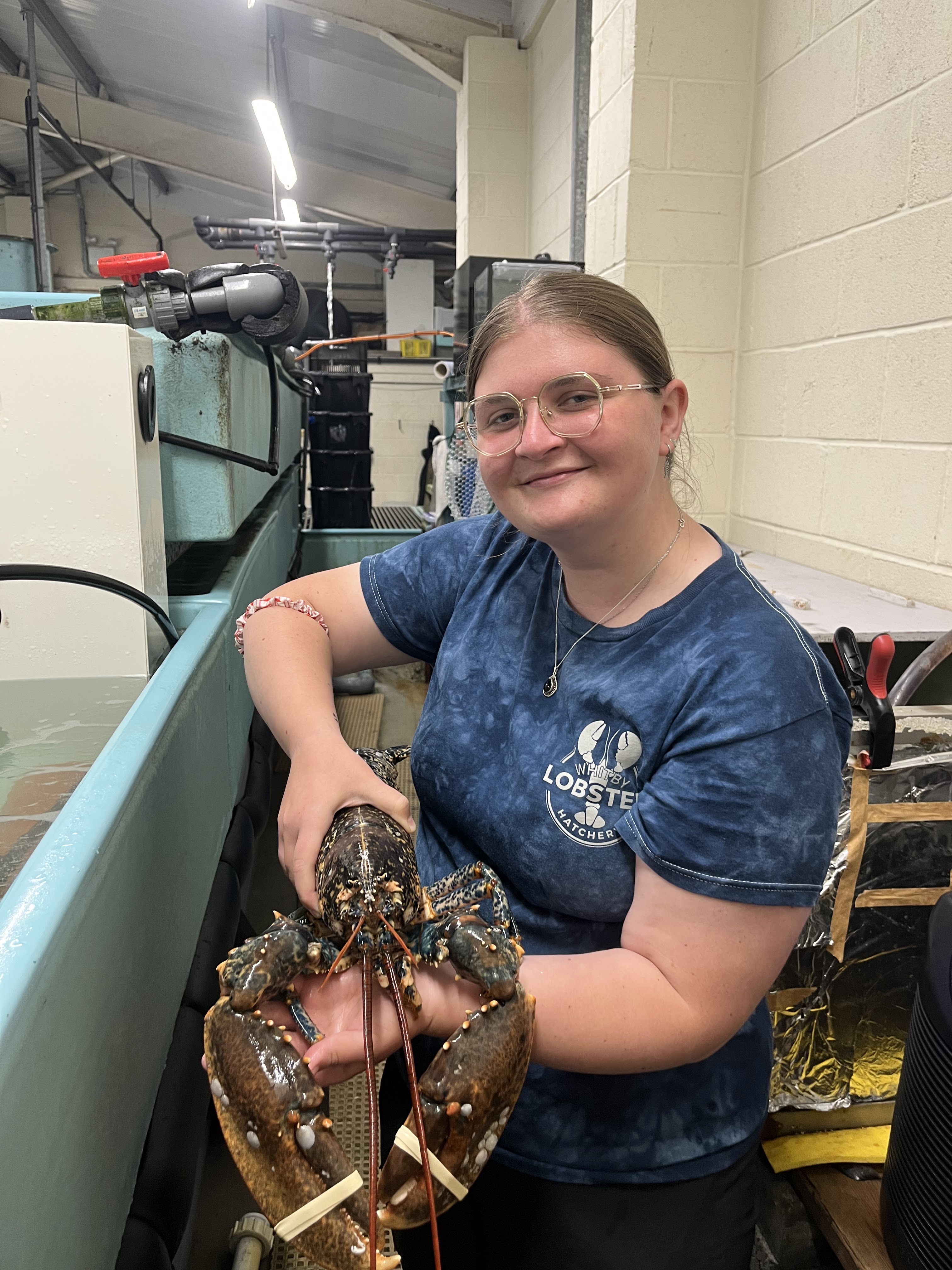
Molly Leifringhouse — enrichment and a brine shrimp boost
Molly ran two trials across all 12 of our upwellers over three months. The first compared enriched Artemia against the unenriched Artemia we usually feed; the second tested adding an adult brine shrimp feed on top. Her full analysis is still to come, but the early signs were clear enough that we've already built the supplementary brine shrimp feed into our daily routine — it significantly reduced clawlessness, where lobsters develop without their claws.
A huge thank you to the Woodsmith Foundation, and to every student and volunteer who has been part of the team this year. We genuinely couldn't do this work without you.
Join us in 2027
We're now recruiting volunteers and placement students to start in early spring 2027. You don't need previous experience — a genuine passion for marine life and conservation is what matters most. You'll need to be 16 or over. To apply, visit whitbylobsterhatchery.co.uk.
Like What You See?
Our Supporters










Contact Details
Whitby Lobster Hatchery,
9 Pier Road,
Whitby,
North Yorkshire,
YO21 3PU,
United Kingdom
© 2026 by Whitby Lobster Hatchery. All Rights Reserved. Registered Charity 1193944
Designed by Fitzpatrick Design / Developed by Askew Brook
