
Adopt a lobster adopt now
Two years ago, Molly stood outside our hatchery window watching volunteers count lobster larvae. This summer she came back to run the research that could change how we rear them.
In the summer of 2024, a marine biology student from California spent a few days in Whitby with a friend from university. Her friend went to see the Abbey. She went to the Whitby Marine Discovery Centre — and never quite made it past the window into the hatchery.
On the other side of the glass, volunteers were counting lobster larvae one by one. She stood and watched.
"Seeing the volunteers counting larvae through the windows into the hatchery was just so cool," she says. "Hearing about how the hatchery was using research to both conserve this important species and also support the local economy was really inspiring. They were really doing it!"
This summer, Molly came back — this time on the other side of the glass, as a research intern with the Whitby Lobster Hatchery.
Molly grew up in San Diego, surfing and diving, and now studies Marine Biology at the University of Hawai'i. She started her degree in Marine Affairs and Policy before switching, once she realised how much she enjoyed the science and the lab work.
Hawai'i is not short of marine biology. What it is short of is cold water.
"I'm definitely more interested in cold-water marine ecosystems," she says, "and a visit to the Discovery Centre a few years ago inspired me to seek out opportunities outside of my university's tropical specialities."
So she crossed nine time zones and an ocean to spend a summer on a working fish quay in North Yorkshire, counting larvae.
Rearing lobsters is hard. A lobster larva has to survive several moults before it reaches stage IV — the point at which it looks like a tiny lobster and is robust enough to be released. Getting more larvae to that point, in better condition, is the single biggest lever on how many lobsters we can return to the North Sea each year.
Molly's project tackled it through food.
The larvae in our tanks are fed Artemia — brine shrimp. Her idea was to make that food more nutritious by enriching the Artemia with a marine algae called Isochrysis before feeding them to the larvae. Alongside that, she trialled introducing a larger brine shrimp feed at stage III, to encourage the larvae to moult sooner.
"Enriching Artemia basically means feeding the algae to the Artemia," she explains, "so that the lobster larvae are being fed a more well-rounded diet."
It did not go smoothly. The plan was to grow the Isochrysis from a starter culture and keep it alive as a continuous supply. The first culture crashed inside a week.
"We had to get creative with sourcing our algae and restarting our culture," she says. "This is all part of the process, though, and after a couple of tries we now have a nice healthy culture!"
She rebuilt it. It held. And then the data started coming in.
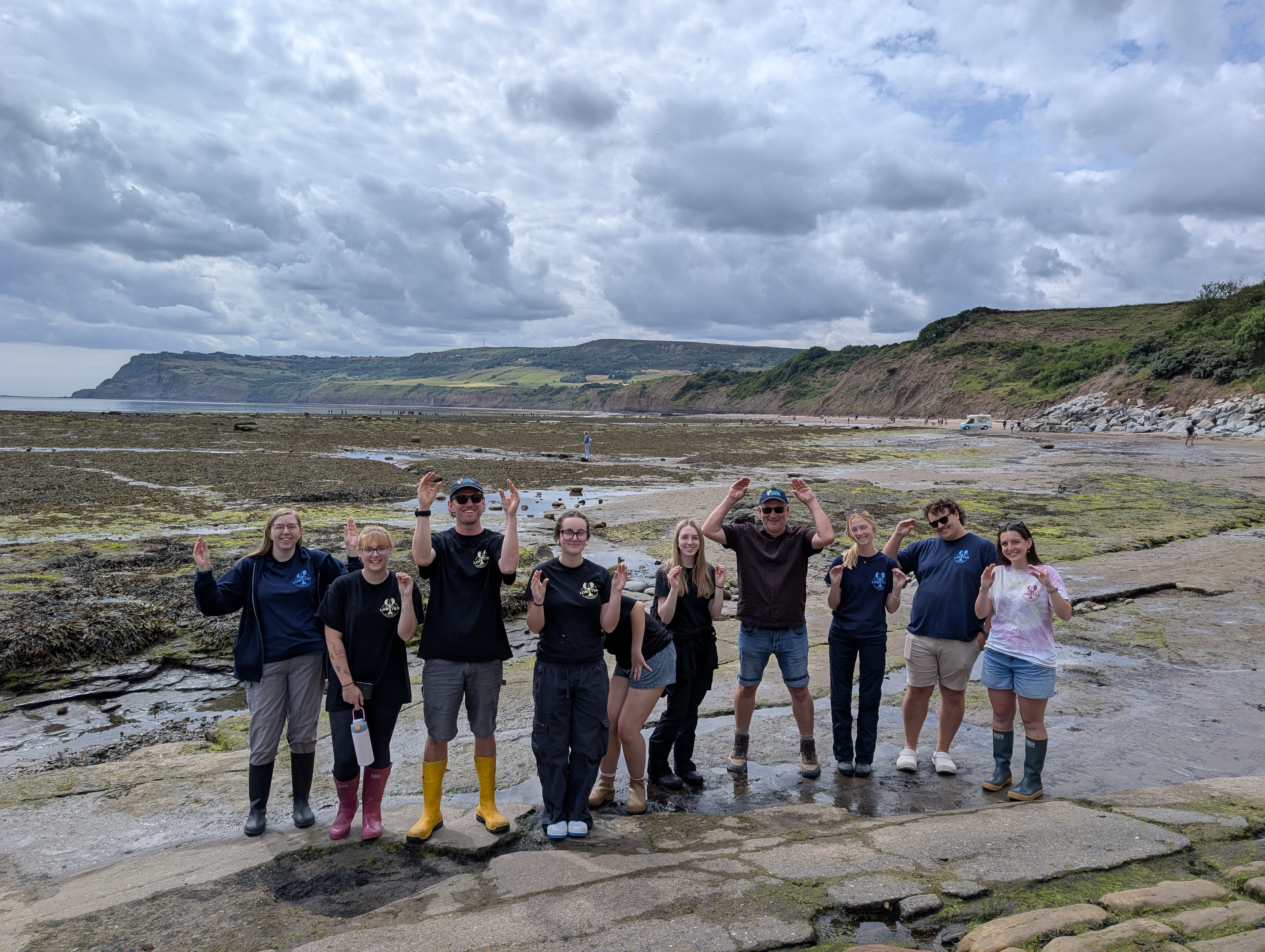
The results are genuinely exciting. The enriched feeding treatments:
triggered an earlier moult to stage IV — larvae reached release condition faster
reduced the number of clawless juveniles — young lobsters that develop without a full set of claws face much poorer odds in the wild
improved overall survival rates
If we adopt these treatments in daily practice, juveniles reach release condition sooner, tank space frees up faster, and we can release more lobsters every year. That is direct progress towards our target of 100,000 juvenile lobsters a year by 2028.
As Molly puts it: "If the treatments are triggering faster moults, the lobsters can be released sooner, freeing up space for new larvae and increasing the hatchery's release numbers."
That matters well beyond our tanks. Healthy lobster populations support a healthy seabed — and the livelihoods of the Whitby fishing families whose knowledge and support made this hatchery possible in the first place.
What does a typical day in the hatchery look like?
"Every day in the hatchery is a little different, which is one thing I really like about this placement. Some days we have a release to prep for, other days we are doing maintenance on the many different systems. Regardless of these 'side-quests', we count out larvae and stage IVs and prepare feeds every day."
What has surprised you most?
"One thing that really shocked me was getting our berried hen Big Bertha and finding out that a hen that size was almost certainly older than anyone working in either the hatchery or the Discovery Centre that day. It's just crazy to think that she was out there in the North Sea before any of us had been born."
A "berried hen" is an egg-bearing female lobster. The largest animals are also the oldest and the most productive — a single big female can carry tens of thousands of eggs.
What have you been doing outside the hatchery?
"Outside the hatchery I like to do anything outside! I love hiking and I've already got to do the Cleveland Way from Whitby to Robin Hood's Bay, which had some of the most insane views I've ever seen. Before I leave I'd also really like to get out and surf at Cayton if the waves are good."
Has this changed your plans?
"This internship has really solidified my wanting to pursue aquaculture and fisheries science. Understanding the constant link between the hatchery and the local history and economy made my work feel extra special and intentional."
Anything else you'd like people to know?
"I am beyond grateful for everyone at the Hatchery and Discovery Centre who made my visit and this project possible. The WLH is such a special organisation, and I couldn't recommend participating in a release more!"
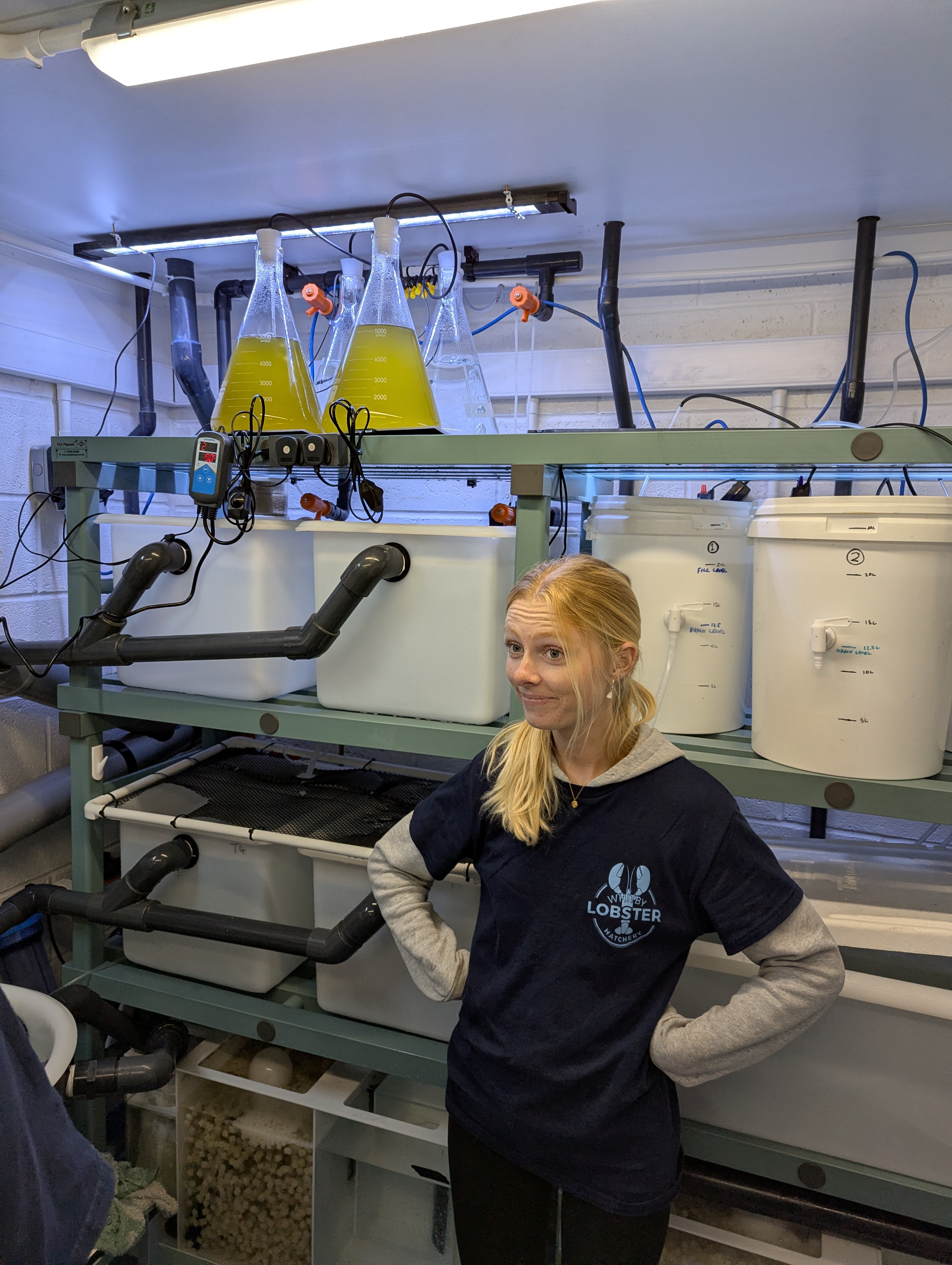
Molly returns to Hawai'i to finish the last two years of her degree, with a career direction now firmly set. Her findings stay with us.
Her story says something we come back to often. A hatchery on a fish quay in a small Yorkshire town, run alongside the people who fish here, is doing work good enough to pull a student halfway around the world — and to send her home committed to the same thing.
Sometimes it starts with someone standing at a window.
Come and see it for yourself. Our juvenile lobster releases are free, family-friendly and happen along the coast throughout the season. Follow us to hear when the next one is announced — or visit the Whitby Marine Discovery Centre to look through the same window that started all this.
North Sea Conservation | Whitby Lobster Hatchery | northseaconservation.org
Like What You See?
Our Supporters







Contact Details
Whitby Lobster Hatchery,
9 Pier Road,
Whitby,
North Yorkshire,
YO21 3PU,
United Kingdom
© 2026 by Whitby Lobster Hatchery. All Rights Reserved. Registered Charity 1193944
Designed by Fitzpatrick Design / Developed by Askew Brook